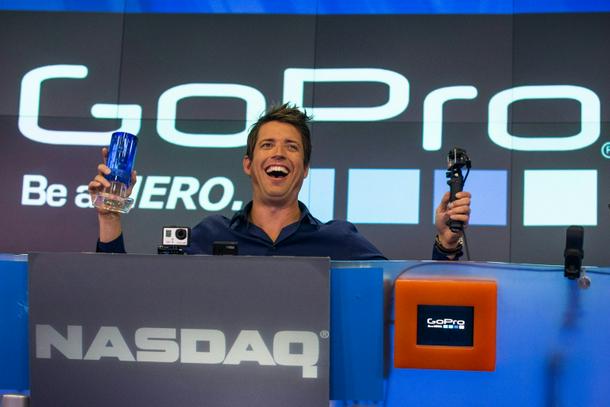
GoPro was first launched in 2002 by founder Nick Woodman, who initially sought to capture images from his surfing ventures
New York (AFP) - For nearly 25 years, GoPro cameras have gone underwater, glided with parachutes and slipped down ski slopes, allowing the adventurous to record images of their experiences.
But the California company now faces a battle for survival amid intensifying competition, questionable demand for electronics and rising material costs.
Its plight is spelled out in US securities filings containing cryptic language.
GoPro “has incurred operating losses and negative operating cash flows,” said PricewaterhouseCoopers.
Failure to meet GoPro’s commitments under financing arrangements will “raise substantial doubt about its ability to continue as a going concern,” the auditing firm added.
Such language and the refiling of financial statements means creditors may assert an “event of default” under the agreements, said GoPro, which described itself as being “in active discussions” with lenders, including Farallon Capital Management and Wells Fargo.
The company has also engaged a financial advisory firm “to evaluate a range of strategic alternatives that could include a sale of the company or merger,” GoPro announced in May.
Since then, no buyer has emerged. GoPro did not respond to AFP requests for comment.
- Capture life’s passions -
Launched in 2002 by Nick Woodman, who initially sought to capture images from his surfing ventures, GoPro went public in 2014.
Woodman rang the bell on the Nasdaq trading floor, and the company touted its products as a way to enable “people to capture their life’s passions in ways they could have never done before.”
The company’s ability to record and share vibrant images from activities fit well with the growth of social media, although heavy competition from smartphones has been a persistent challenge.
In May, Morgan Stanley equity analysts said they were taking a “cautious stance” on the company, citing “continued uncertainty within the consumer electronics market, as well as heightened competitive pressures and memory headwinds.”
The company’s revenues in 2025 came in at $651.5 million, down about 44 percent from four years earlier.
In April, GoPro announced it had engaged management consulting firm Oliver Wyman to help it pursue new opportunities for its technology with the defense and aerospace sector.
In a May conference call, Woodman told analysts that the company had received “several inbound inquiries related to” mergers and acquisitions from “various” interested parties, adding: “I am fully supportive of evaluating strategic opportunities for the company to unlock value for shareholders.”
Morgan Stanley described the prospects as potentially promising, but added that the current strategic reboot “is not GoPro’s first attempt at reinvention.”
On May 28, GoPro announced that its new Mission 1 line of products was available, describing the series as “the world’s smallest, lightest, and most rugged 8K and 4K Open Gate cinema cameras.”
But the company reported a first-quarter loss on revenues of just $99.1 million, down 26 percent from the year-earlier period.
GoPro also announced in April it was cutting 23 percent of its staff, which had numbered 631.