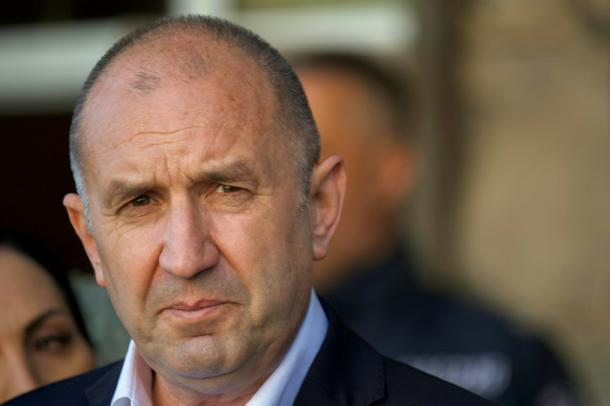
Rumen Radev, a longtime EU critic, says he wants Bulgaria 'to continue on its European path'
Sofia (Bulgaria) (AFP) - Bulgaria’s ex-president Rumen Radev, an EU critic who wants renewed dialogue with Russia, won parliamentary elections held on the weekend, according to near-complete vote results on Monday.
The 45 percent of ballots his populist Progressive Bulgaria (PB) coalition scored in Sunday’s polls – according to 98 percent of the vote counted – puts it on track to take some 130 seats in the 240-seat legislature in the European Union’s poorest nation.
Russia applauded the result, with Kremlin spokesman Dmitry Peskov saying it looked “favourably” on Radev’s push for thawed ties with Moscow.
European Commission chief Ursula von der Leyen, meanwhile, said “I look forward to working together” with Radev.
Radev told reporters that PB, which ran on anti-graft promises, “won unequivocally”, and said Bulgaria would “make every effort to continue on its European path”.
- Urges ‘pragmatism’ -
But the 62-year-old former air force major general, who resigned as president earlier this year, also argued the bloc needed to change.
“A strong Bulgaria and a strong Europe need critical thinking and pragmatism,” he said.
The vote was the eighth general election in five years. It delivered the first outright parliamentary majority for a single formation in Bulgaria since 1997, when a centre-right, pro-European grouping won.
Anti-corruption rallies in 2021 brought down the conservative administration of long-time pro-European leader Boyko Borissov.
Radev supported similar anti-graft demonstrations last year that ended the latest conservative-backed government.
Some Bulgarians reacted with a wait-and-see attitude to what a Radev administration would do.
“It’s very interesting, because one party will be in power, the others will be in opposition, and in reality it will hold all the power, but also all the responsibility,” a 30-year-old youth programme manager, Gergana Yakimova, told AFP in Sofia.
“Another question is whether Radev’s party has people who can govern, since it was only recently established,” she said. “I want to see what happens.”
Iliya Dukadinov, a 67-year-old engineer, said: “I don’t think this is the best possible outcome, but it’s what the majority of people decided. I don’t think this cabinet will last very long.”
Trayanka Ilieva, a 48-year-old landscaper said she hoped Radev would get rid of the euro and bring back Bulgaria’s national currency, the lev.
“No matter how much we earn, it’s never enough,” she said. “I’m glad that Rumen Radev won. We hope he’ll make our country better.”
- No EU veto -
Voters turned away from ex-prime minister Borissov’s GERB party, which got 13 percent of ballots – neck-and-neck with the liberal PP-DB coalition, according to the electoral commission’s near-complete results.
While Radev opposes Bulgaria sending arms to Ukraine – breaking with most other NATO countries – he has said he would not use his country’s veto to block EU decisions.
That distinguishes him from nationalist Hungarian leader Viktor Orban, who a week earlier lost an election in his country that ended a 16-year reign marked by frequent blocking of EU policy making.
Radev is expected to face pressure to lead Bulgaria down a eurosceptic path, both from within his own party and the far-right opposition, according to Daniel Smilov, a political scientist at the Center for Liberal Strategies.
“His initial signals are that he will pursue a pro-European policy and will not block the EU … The whole question is whether those signals will actually be followed through,” he told AFP.
While Radev’s coalition can govern on its own, “the real question” is whether he will take “real steps” against high-level corruption, including through reforms of the judiciary, political analyst Teodor Slavev said.
For key judicial or constitutional changes requiring a two-thirds majority, he will need support in parliament from other parties.
Borissov, who headed the country virtually uninterrupted for close to a decade, congratulated Radev Sunday. But he warned him: “Winning elections is one thing, governing is another”.