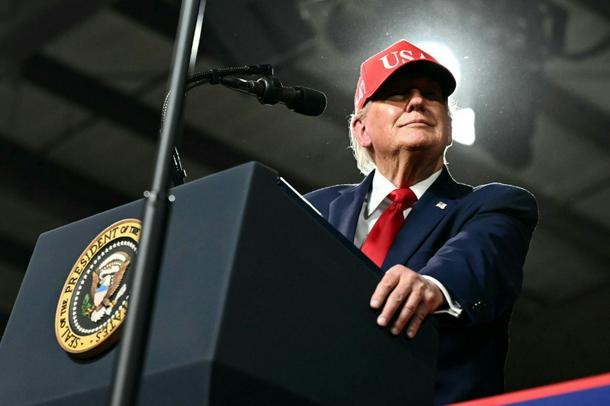
Trump said he believed the public execution would be a deterrent to potential terrorists, but that the plan faced strong opposition
Washington (United States) (AFP) - The firing squad execution of a convicted military base shooter will not be livestreamed, US President Donald Trump announced Thursday, canceling a contentious plan by Defense Secretary Pete Hegseth.
The move to livestream Nidal Hasan’s execution was widely opposed at home and abroad, prompting outrage from both US Democratic and Republican politicians, the Catholic Church and the United Nations.
The cancellation is a blow to Hegseth, who is already under fire over the stalemated Iran war and its fallout, which are weighing on Trump’s Republican Party ahead of November midterm elections.
Hasan “will die, as scheduled, by firing squad, but this event will not be streamed,” Trump said in a post on his Truth Social platform.
The US president indicated he did not personally oppose the streaming plan, saying it “might have been a strong deterrent for the World to witness how America deals with Terrorists and SCUM like Hasan.”
But “many very good and well meaning people would rather not watch him die,” Trump said, adding that the execution could still be viewed in person by immediate family of the victims if they wanted to do so.
Pentagon spokesman Sean Parnell said Hegseth and Trump had spoken before the announcement.
“The secretary supports the president’s decision, and they are completely aligned,” Parnell said in a statement.
Hasan’s execution – scheduled for December 3 at Fort Hood, Texas, where he gunned down 13 people in 2009 – is set to be the first by a US military firing squad since 1945.
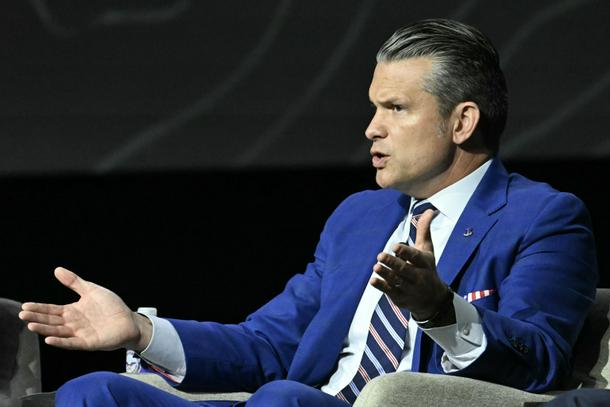
US Secretary of Defense Pete Hegseth's plan to livestream Nidal Hasan's execution sparked a huge backlash at home and abroad
Last week, Hegseth said that “we’ll make sure that people are able to watch it, that it’s public,” later confirming that the plan was to livestream the execution.
“People need to understand that…there’s serious consequence for these types of things,” he said.
Backlash to the plan quickly grew following Hegseth’s announcement.
The United Nations said streaming the execution would amount to “torture,” while the president of the US Conference of Catholic Bishops said it was a “barbaric promotion of a culture of death,” and both Australia and Britain’s prime ministers described it as “abhorrent.”
- Most Americans opposed -
A Washington Post-ABC News-Ipsos poll released Thursday found that eight in 10 Americans opposed the livestreaming of the execution.
Lawmakers from both main US parties have said they were against it, and dozens of retired US military officers warned in an open letter against broadcasting the execution.
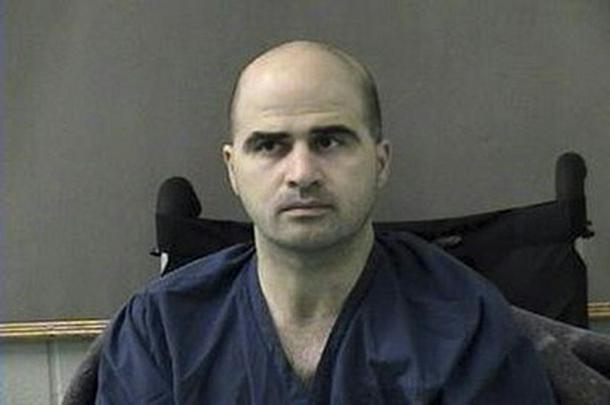
Fort Hood shooter Nidal Hasan was sentenced to death in 2013
It “will taint the honor of the military that employs it, and a nation that allows it,” and “will ensure that Hasan becomes a martyr for attacking and killing his fellow soldiers,” said the officers, including more than 40 generals and admirals.
Some US Democratic lawmakers on Thursday hailed the decision to cancel the livestream while slamming Hegseth.
Representative Chrissy Houlahan said it was “as clear an illustration as any that Hegseth is dangerously unqualified,” while Senator Jack Reed said Trump was “right to backtrack” but that Hegseth “deserves to be admonished for his lack of judgment.”
The last US military execution was carried out in 1961, when John Bennett was hanged for rape and attempted murder.
The Death Penalty Information Center says 135 troops have been executed by the US military since 1916.
According to rights group Amnesty International, at least 17 public executions are known to have been carried out in 2025 – six in Afghanistan and 11 in Iran.
Twelve of the 13 people Hasan killed and 30 of those he wounded were soldiers. He was shot by a civilian police officer who responded to the attack and is paralyzed from the waist down.
Hasan chose to conduct his own defense during the trial but called no witnesses and gave no testimony, and made no attempt to deny the charges.
He was sentenced to death by a military jury in 2013.
The court that convicted Hasan was told he was opposed to the US military’s occupations of Iraq and Afghanistan, and that he had spoken online with an alleged Al-Qaeda figure, radical cleric Anwar al-Awlaki, an American citizen subsequently killed in a US drone strike in Yemen.